White oak has emerged as a favorite in modern kitchen and bath design—not as a fleeting trend, but as a material that offers both visual warmth and structural longevity. Unlike painted cabinetry or engineered woods, white oak presents a natural texture and grain pattern that adapts to a wide range of interior styles.
In this guide, we’ll explore the benefits of white oak cabinetry, how it compares to other finishes, and where it fits best—functionally and stylistically—in your home.
What Are White Oak Cabinets?
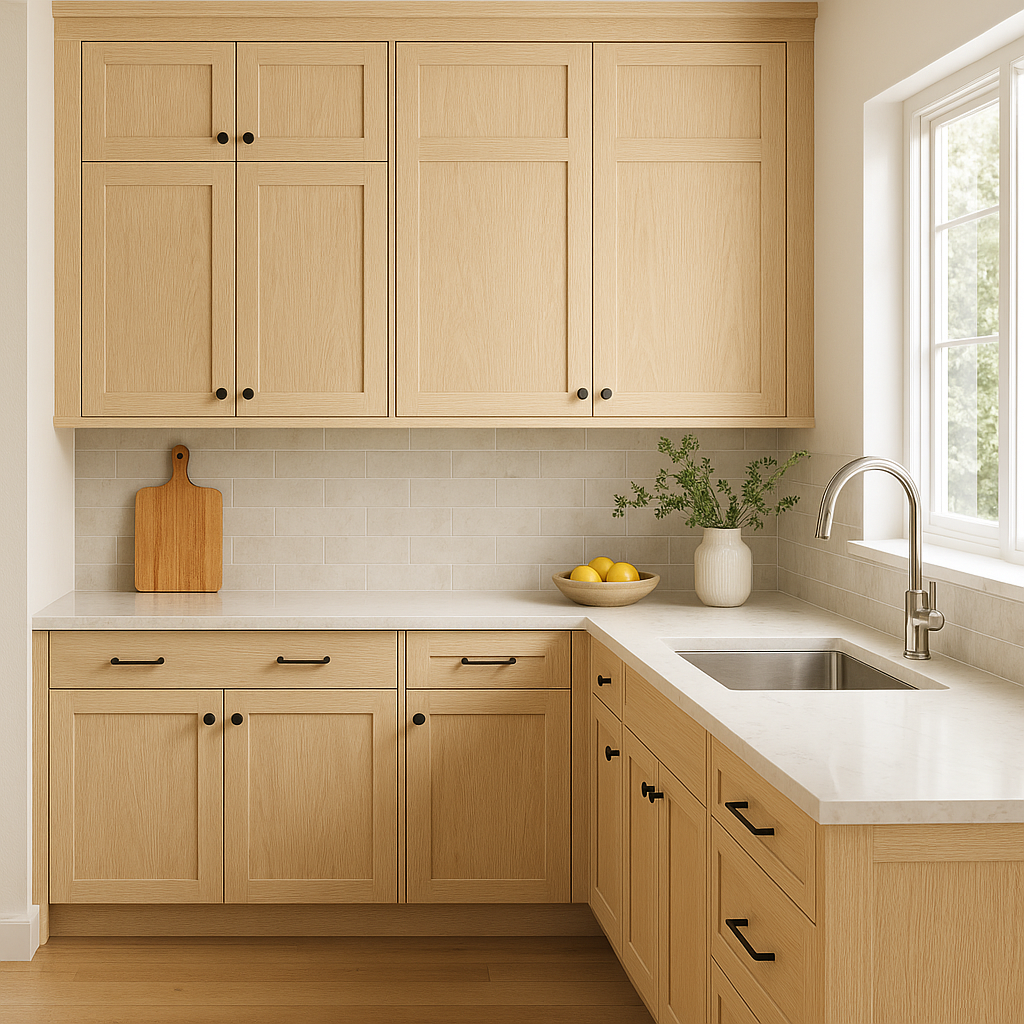
White oak cabinets are made from domestic hardwood, known for its dense grain, pale honey undertones, and minimal porousness. It’s a durable species that accepts both clear and pigmented finishes, making it adaptable for traditional, transitional, and contemporary spaces alike.
White oak is distinct from red oak. While red oak has a more pronounced pink hue and coarser grain, white oak has a more refined texture and neutral warmth, which makes it a preferred choice for clean-lined or natural designs.
Key Benefits of White Oak Cabinetry
1. Durability and Longevity
White oak is an exceptionally strong wood, with a tight grain structure that resists warping and wear over time. It is often used in flooring and furniture—its translation into cabinetry is natural.
For homeowners seeking a long-term investment rather than a short-lived trend, white oak provides structural confidence.
2. Versatility Across Styles
White oak works across a broad design spectrum. It feels at home in:
- Scandinavian-inspired minimal kitchens
- Organic modern and Japandi-style interiors
- Rustic transitional or mountain lodge homes
- Traditional spaces softened with natural textures
Whether finished in a natural matte, a bleached neutral, or a soft brown stain, white oak adapts to a homeowner’s vision without overwhelming the room.
3. Visible Grain with a Subtle Character
Unlike painted cabinets—which conceal the natural beauty of the material—white oak celebrates the integrity of the wood. The grain is noticeable but not busy. It adds depth without shouting.
This makes it ideal for homeowners who want texture without heaviness, and for designers aiming to bring warmth to clean, architectural lines.
4. Pairs Well With Other Finishes
One of the biggest reasons white oak remains popular is its ability to pair well with contrasting materials. Whether you’re using matte black hardware, quartz countertops, or painted perimeter cabinets, white oak supports strong material contrast without competing visually.
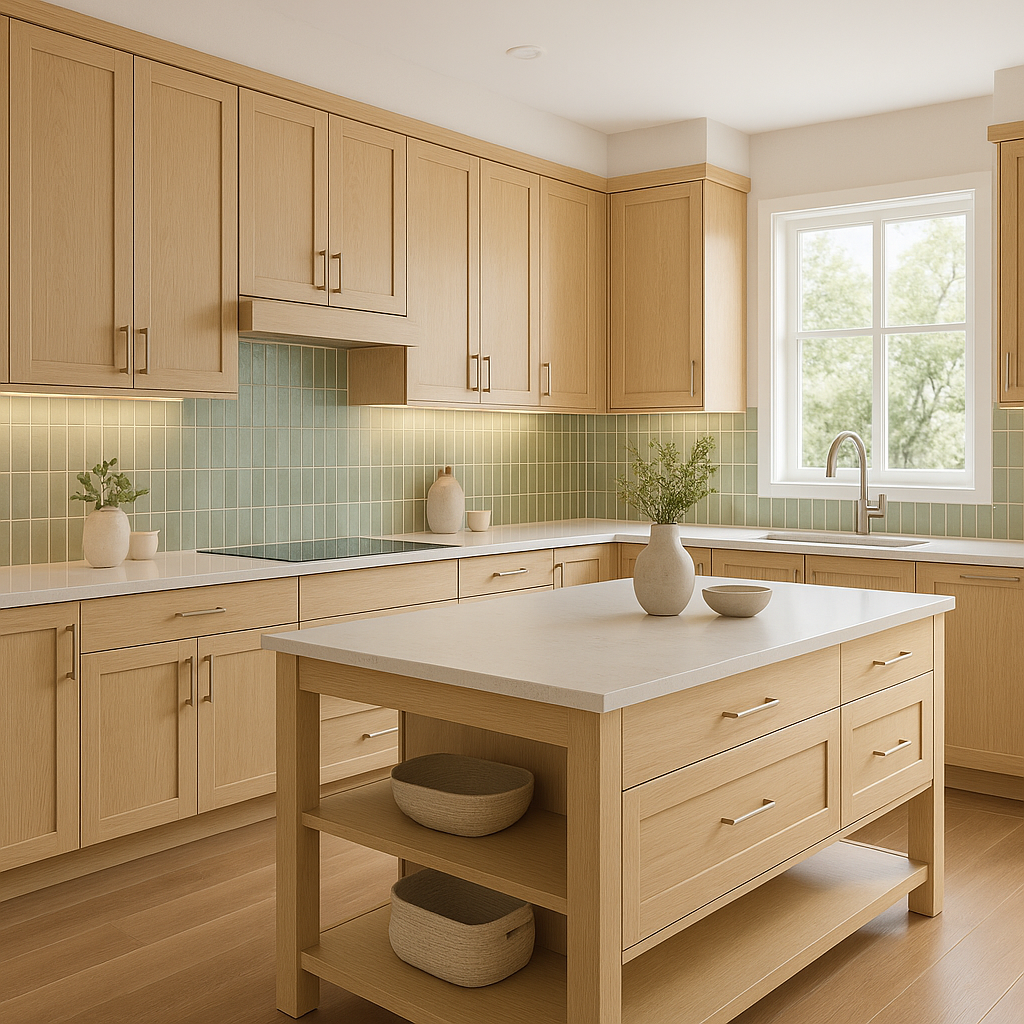
For this reason, it’s often used in two-tone cabinetry layouts, where white oak may appear on an island while the remaining cabinetry uses painted or overlay styles.
5. Non-Trend Trend
White oak has experienced a rise in popularity over the last five years, but unlike “trendy” paint colors or stylized door profiles, its application has proven durable in both resale and visual longevity.
Buyers continue to seek out natural wood tones, especially in high-end kitchen and bath renovations. When designed thoughtfully, white oak cabinets don’t date a home—they elevate it.
Popular Design Applications for White Oak Cabinets
If you’re considering white oak in your home, here are the most common and effective places to incorporate it:
Kitchen Islands
Use white oak as a grounding, natural centerpiece surrounded by painted cabinetry. It adds material contrast and works particularly well with lighter countertops.
Full Kitchens
Pair slab or shaker-style doors in white oak with matte black or brass hardware for a balanced, upscale look.
Butler’s Pantry or Bar Areas
White oak adds warmth to secondary spaces, especially when paired with glass-front uppers or vertical appliance garages.
Bathroom Vanities
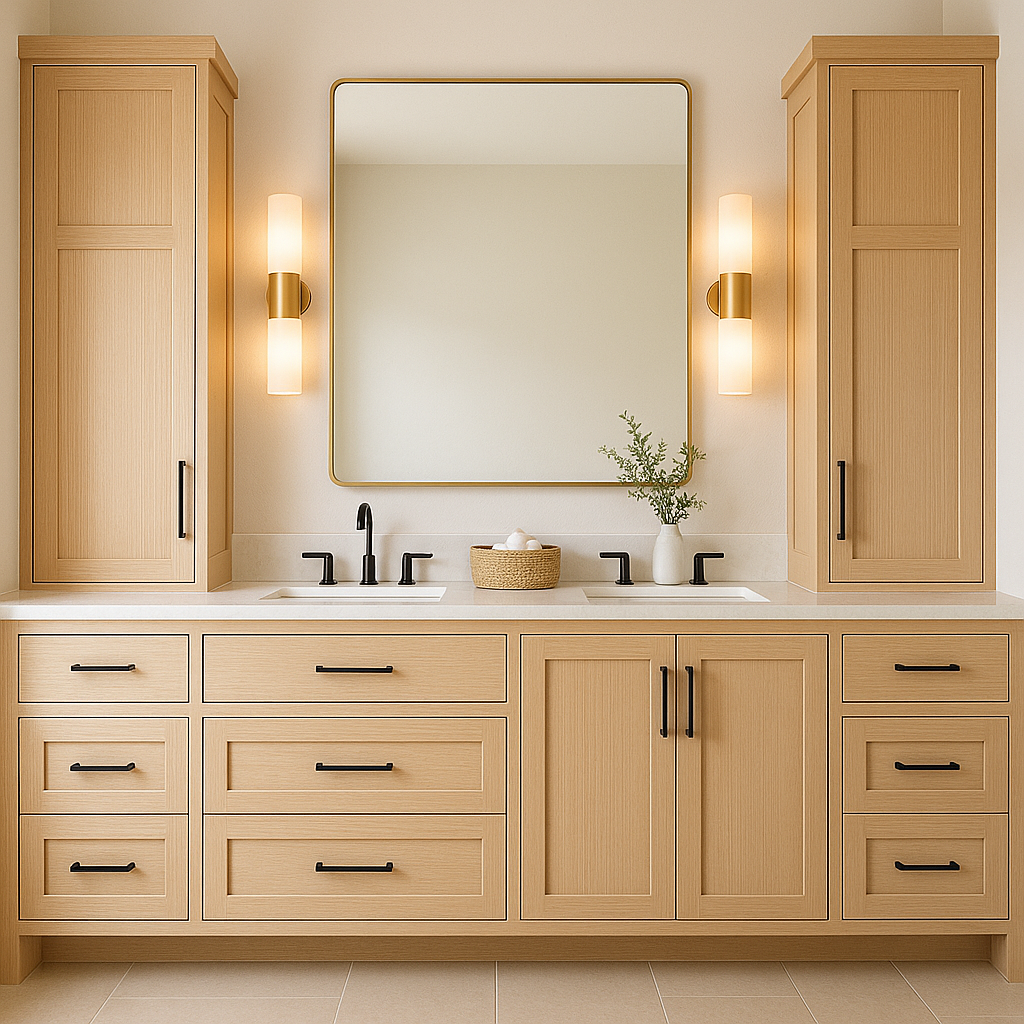
For a spa-like feel, use flat-panel white oak doors with minimal hardware. Natural finishes help maintain a sense of calm and cleanliness.
Mudrooms or Utility Spaces
A white oak bench or built-in storage area offers texture and resilience in high-traffic zones.
What to Know Before Choosing White Oak Cabinets
Finish Matters
White oak can be finished with clear, natural sealers that highlight its grain—or lightly pigmented finishes that mute warmth. Beware of overly yellow or amber stains that shift the aesthetic too far from neutral.
Work with your cabinet provider to test finishes in the actual lighting conditions of your home.
Understand Color Shifts Over Time
Like all natural woods, white oak may shift slightly in color over the years, especially when exposed to direct sunlight. High-quality finishes reduce this risk, but it’s helpful to know that the appearance will mature—much like a leather sofa or natural stone surface.
Consider Cabinet Style
White oak performs well with flat-panel (slab) and shaker-style doors. It is less commonly used with ornate or raised-panel designs, where heavy detailing may distract from the wood’s natural grain.
Coordinate Hardware Thoughtfully
Choose minimalist hardware in natural metals or dark matte finishes. Avoid overly shiny or overly stylized pulls, which may contrast too sharply with the quiet sophistication of the wood.
Why Homeowners Choose White Oak Cabinets Before Hosting Season
For many homeowners updating their kitchens before the holiday season, white oak offers two things they value most: elegance and practicality. Its natural tones create an inviting atmosphere, while its durability holds up to high-traffic entertaining.
Whether you’re serving dinner for ten or cleaning up after a holiday gathering, white oak cabinetry supports beauty and performance at once.
Frequently Asked Questions: Corner Cabinet Solutions
1. Are white oak cabinets more expensive than painted cabinets?
Yes, generally. White oak is a solid hardwood, and the cost reflects both material and finish quality. However, the long-term durability and design flexibility often justify the investment.
2. What finish looks best on white oak cabinets?
Clear matte finishes or light neutral stains typically showcase the wood’s natural grain without introducing yellow or orange undertones.
3. Do white oak cabinets go out of style?
White oak is considered a timeless material. While specific applications may shift with design trends, its underlying character and versatility have remained in demand for decades.
4. Can I use white oak in just part of the kitchen?
Absolutely. Many homeowners use white oak selectively—on an island, pantry, or open shelving—to add warmth without overwhelming the space.
5. How do I clean and maintain white oak cabinets?
Use a mild, non-abrasive cleaner and a soft cloth. Avoid harsh chemicals or excessive moisture. Regular dusting and occasional polishing will maintain the wood’s integrity and finish.
Is White Oak Right for Your Kitchen or Bath?
White oak cabinetry offers homeowners an opportunity to blend warmth, modernity, and enduring design value. Whether you’re remodeling ahead of the holidays or planning a kitchen that will serve your family for years to come, this material deserves serious consideration.
When done correctly, white oak doesn’t just follow trends—it surpasses them.